Impact
What our capital should change, and how we will show it
Our impact approach starts from one problem: the lack of early-stage funding to protect, commercialise and scale African intellectual property. It sets out what we do about it, which results we can claim as our own, and how we will report them.
The problem
The gap we exist to close
Promising African technology too often stalls between invention and market, because the capital and support to protect and commercialise it are missing.
The missing middle
Companies that have outgrown incubators, angels and bootstrapping are often still too small for later-stage venture capital, development finance or private equity.
Commercialisation is the constraint
The shortage is in commercialisation, not invention. Protecting intellectual property is costly at the earliest stage, so many founders go without it.
Where we work
At Seed to Series A, pairing equity with hands-on IP commercialisation and go-to-market support.
Impact strategy
Venture capital with deep social intent
We back entrepreneurs solving systemic African problems in climate, food, health and financial services, with capital, mentorship and growth pathways that lead to global exits and measurable socio-economic uplift.
Intentionality
We target start-ups solving Africa’s biggest challenges through deliberate sector and geographic focus, addressing the missing middle and enabling equitable access for underserved populations.
Evidence
Impact is tracked from day one, aligned with the SDGs, IRIS+ and the 2X Challenge, and guided by AAAQ (availability, accessibility, acceptability and quality) to validate impact for defined target populations.
Management
Impact is embedded in governance and operations. ESG, inclusion metrics and “do no significant harm” principles guide our investment decisions.
Field building
By supporting inclusive teams and scalable models, we aim to create a demonstration effect that strengthens the early-stage ecosystem and encourages replication, policy innovation and deeper market inclusion across Africa.
Theory of change
From capital to better lives
We are clear about which results are ours. Capital and support are fully within our control. What companies achieve with them is something we contribute to, alongside founders and other investors.
Indicators follow IRIS+ where a standard exists. Climate indicators apply only to ventures that offer climate solutions. AfDB refers to the African Development Bank’s High 5 priorities.
Sustainable Development Goals
Aligned with the SDGs
Our core goals are decent work and economic growth, industry and innovation, and reduced inequalities. Gender equality and climate action run across the whole portfolio.
Core goals
Cross-cutting
Depending on their sector, individual portfolio companies also contribute to SDGs 2, 3, 4, 6 and 7: zero hunger, good health, quality education, clean water and affordable clean energy.
The SDG icons are used for information, in line with the United Nations guidelines for their use. Their use does not imply endorsement by the United Nations.
In the portfolio
Where our capital is at work
Examples from Anza Capital’s portfolio, across education, clean transport, food, health and financial inclusion.

Education
Koa Academy
Personalised online schooling for learners in South Africa, now expanding into Kenya.
Clean transport
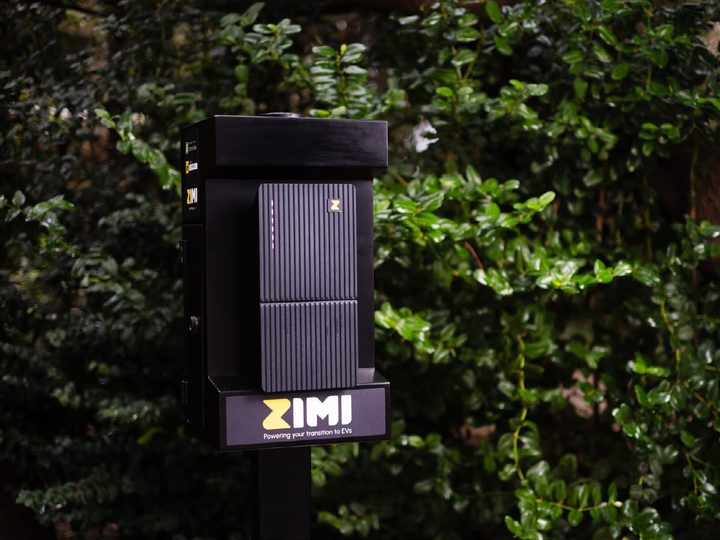
Zimi
An all-in-one ecosystem of electric vehicles, charging and energy that helps fleets cut fuel costs and move to clean transport.

Food
Newform Foods
A platform for industrial-scale cellular agriculture, helping producers make cultivated meat.

Health
Welo Health
An AI-powered workforce health platform that helps employers reduce absenteeism, with on-site screenings by community nurses.

Health
Impulse Biomedical
Medical devices for wider access to care, including a reloadable adrenaline autoinjector.
Financial inclusion
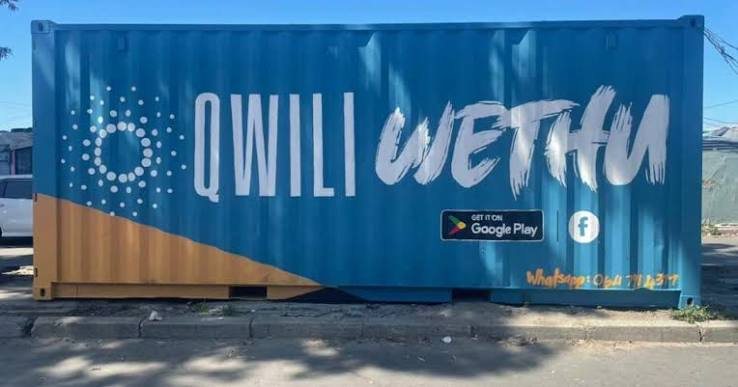
Qwili
An app that lets informal micro-entrepreneurs start a business from a smartphone, from as little as R50.
Measurement
How we will report
Indicators are agreed with each company at investment and follow recognised standards such as IRIS+ where one exists. We report results we can attribute separately from outcomes we contribute to, and we never present one as the other.
Where the data allow, results are split by women and by underserved groups, using definitions that work in each market we invest in, in line with our gender lens and the 2X Challenge criteria.
Results so far
Anza Capital’s portfolio
Thirteen active companies, from company returns to 30 September 2026.
In practice
ESG and reporting
ESG is part of every stage of an investment, from due diligence to the reports our investors receive.
- Before investing
Due diligence
ESG performance is assessed in due diligence before every investment.
- Every quarter
Portfolio indicators
Selected indicators are collected from portfolio companies, with fuller data each year.
- Every year
Company action plans
Portfolio companies report on their ESG action plans and tell us when their ESG risk profile changes.
- Every year
Investor reporting
We report on key ESG metrics at fund level to our investors.
FRAMEWORKS WE TAKE INTO ACCOUNT
- UN-supported Principles for Responsible Investment
- IFC Performance Standards
- UN Global Compact
- UN Guiding Principles on Business and Human Rights
- Recommendations of the Task Force on Climate-related Financial Disclosures
We align with the six PRI principles, as set out in our Responsible Investment Policy.